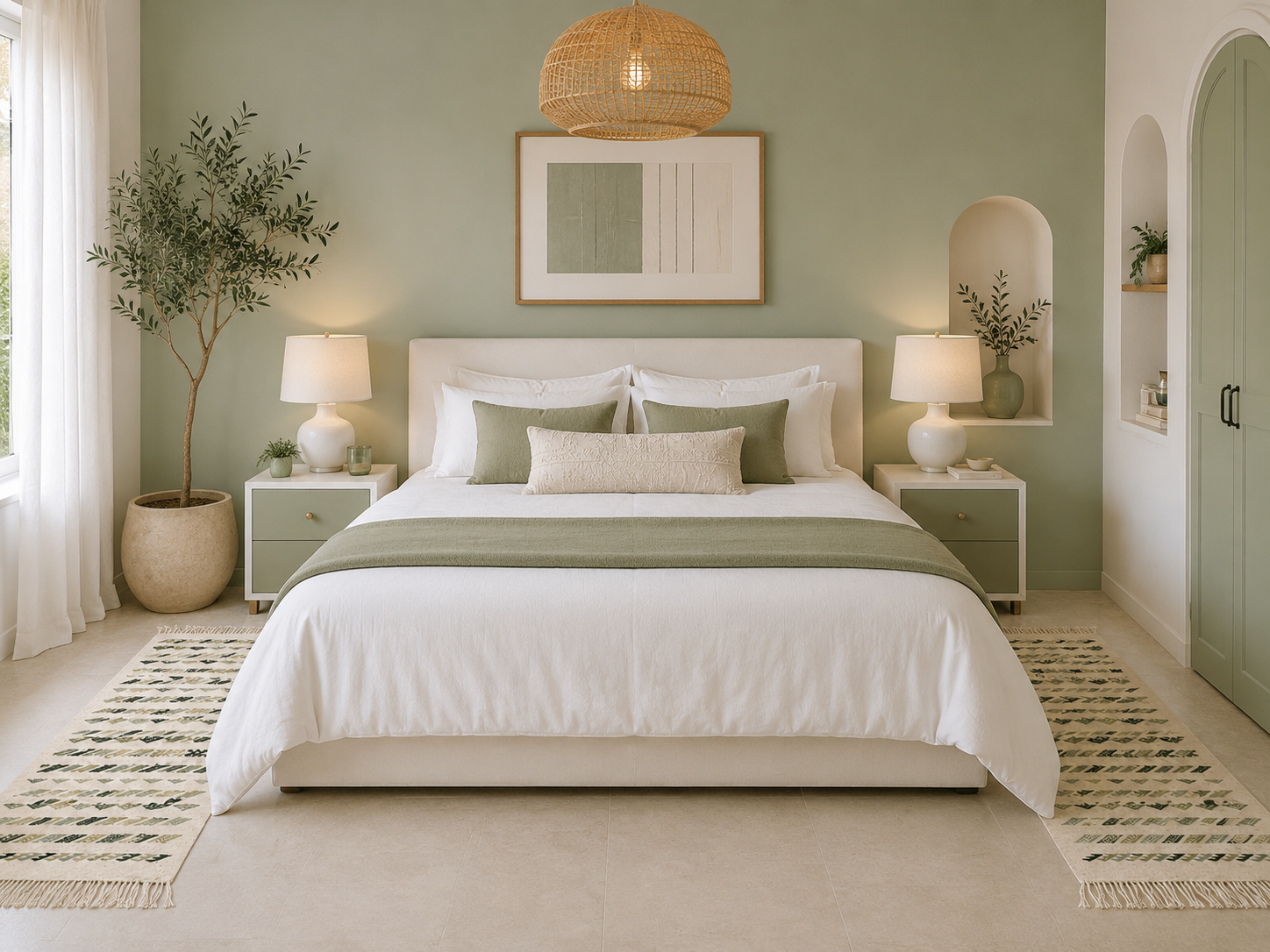
Margoum berbère descente de lit1
140 x 70 cm
Berber textile heritage
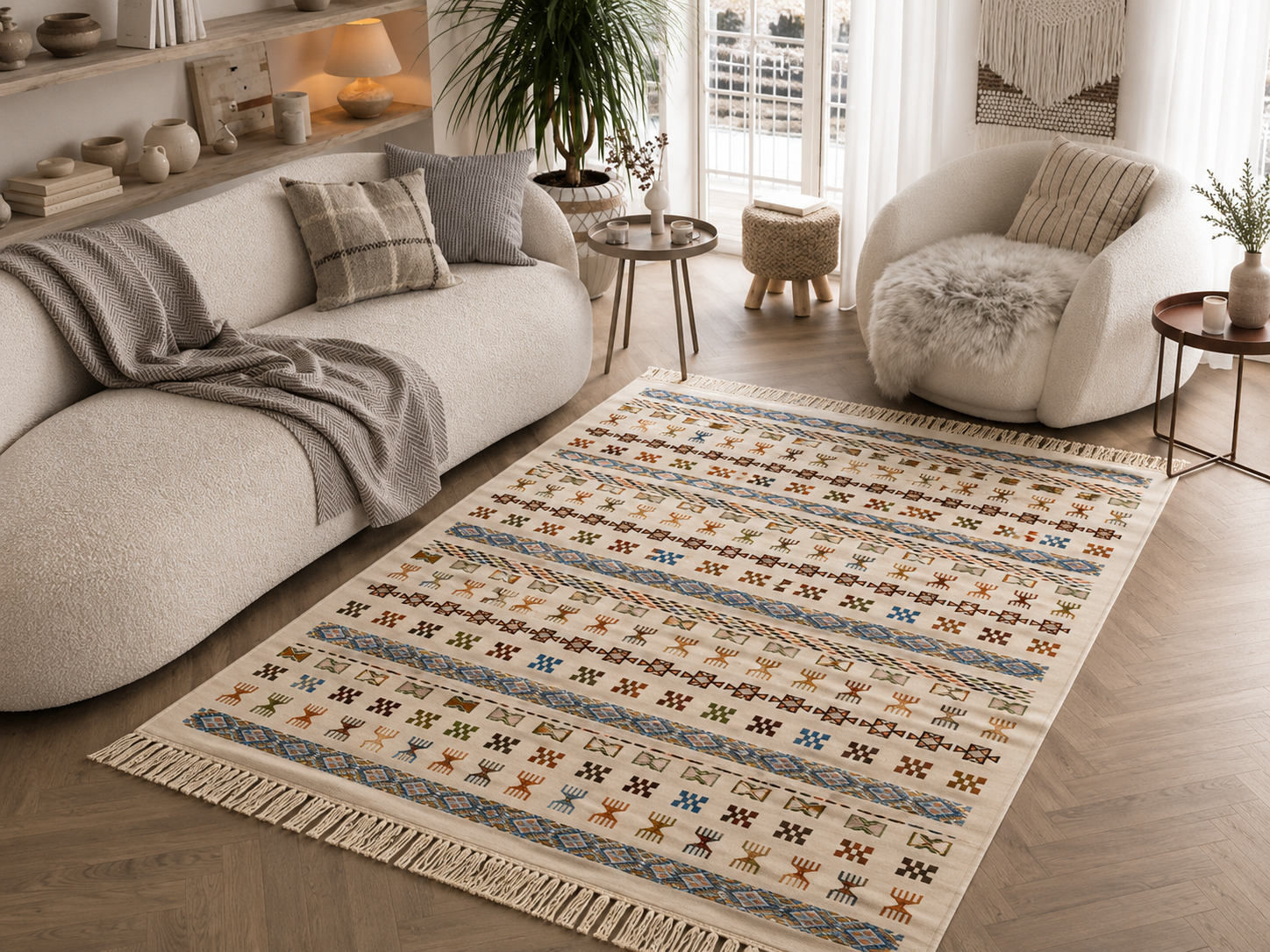
Tunisian Berber rugs use geometry, contrast and tactile wool to tell stories rooted in place. From flatwoven Kilims to heavier Margoum pieces, their character comes from both the weaving method and the artisan’s composition.
Diamonds, stepped lines and repeated signs can refer to protection, landscape or everyday life. Meanings vary by region and artisan, so a rug should be appreciated as a living composition rather than a fixed code.
Natural variation in wool and dye adds depth to the motifs and makes handmade pieces visibly different from printed imitations.
A Berber Kilim is thin, light and practical under furniture. A Berber Margoum adds embroidered relief and a stronger tactile presence. The best choice depends on traffic, comfort and the visual weight of the room.
Use the product dimensions and material details to compare real pieces, then follow the links to related Tunisian weaving guides.
Rotate the rug periodically, vacuum gently and limit long exposure to strong direct sunlight. Blot spills instead of rubbing them into the fibers.
For deep cleaning, use a specialist familiar with handmade wool textiles and traditional fringes.
No. Neutral palettes are common, but Tunisian weavers also use red, green, blue and multicolored geometric compositions.
It is a flatwoven rug whose geometric language is associated with Berber textile traditions. Its surface has no cut pile.
Yes. Its geometry and natural texture pair especially well with wood, stone, linen and simple contemporary furniture.
These links are generated from the active production catalog.
140 x 70 cm
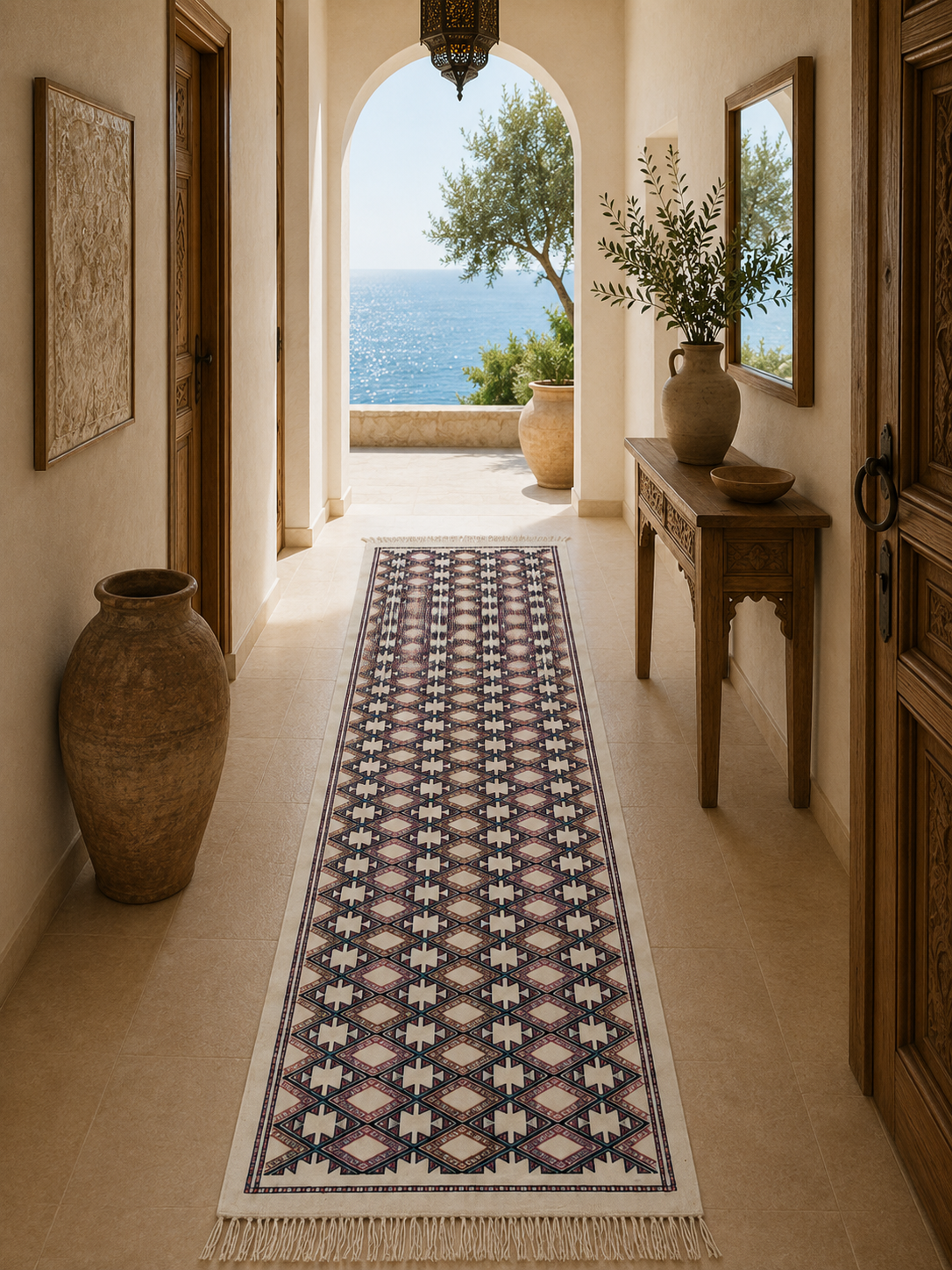
200 x 90 cm
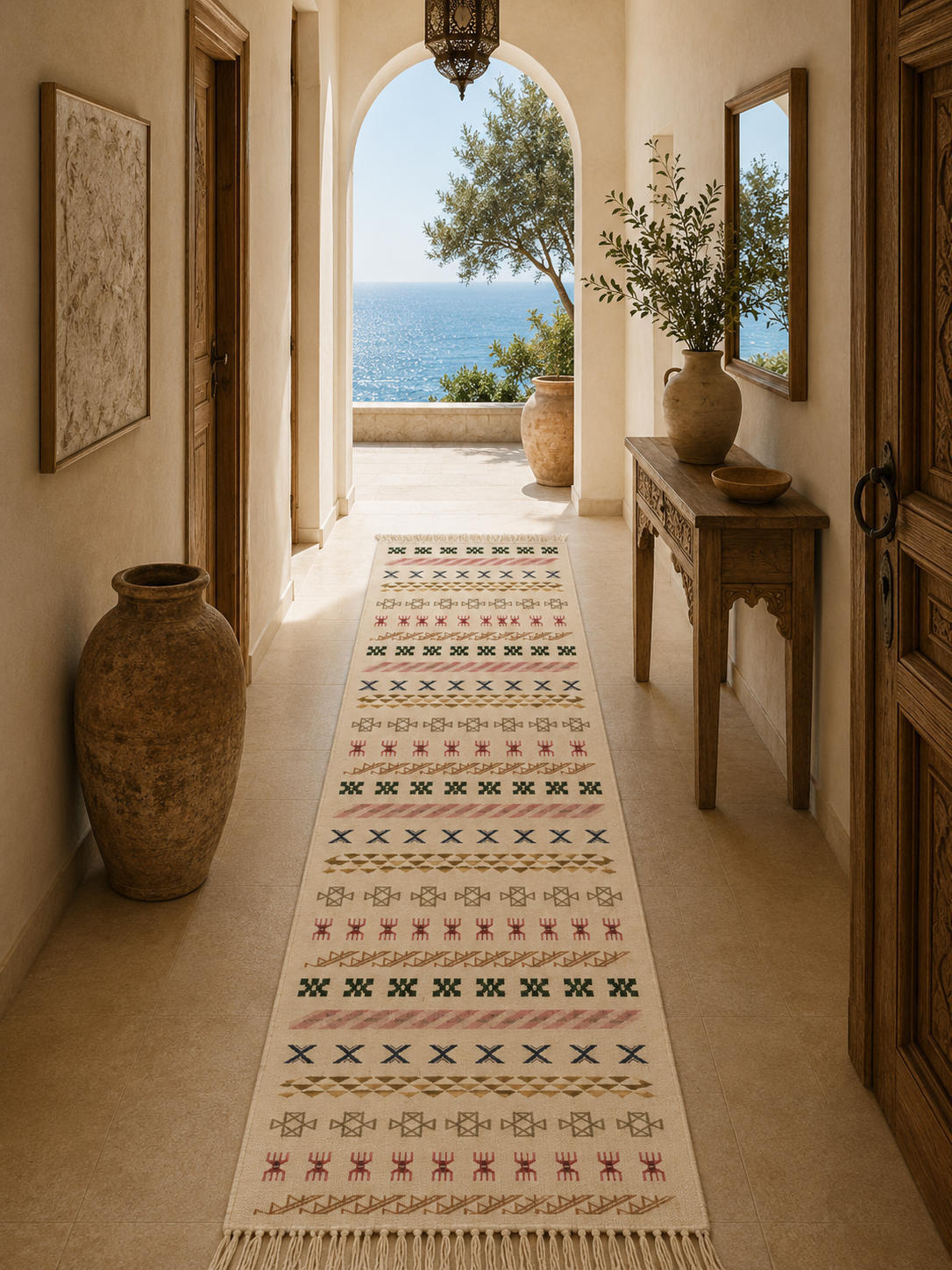
300 x 80 cm
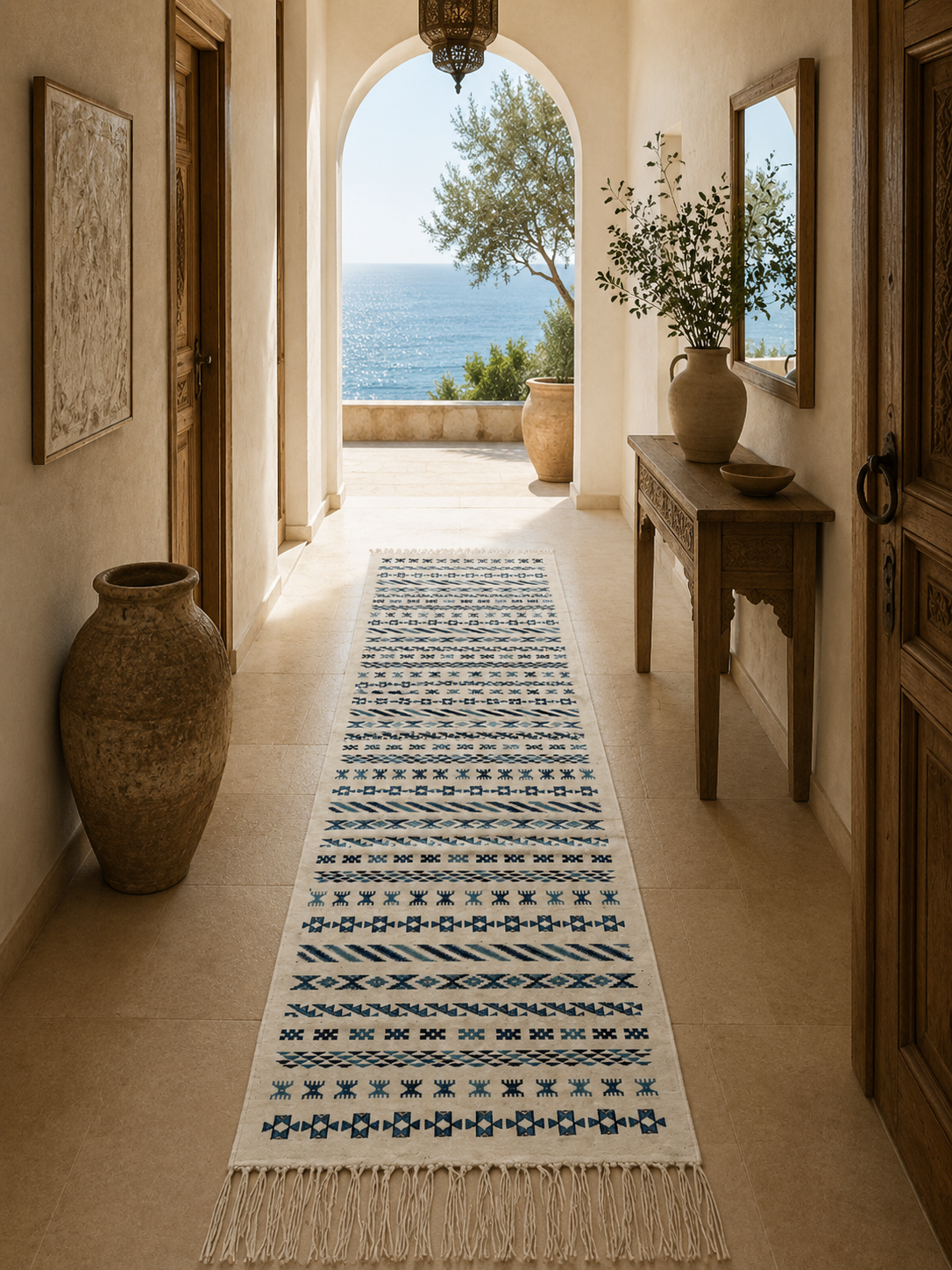
300 x 80 cm
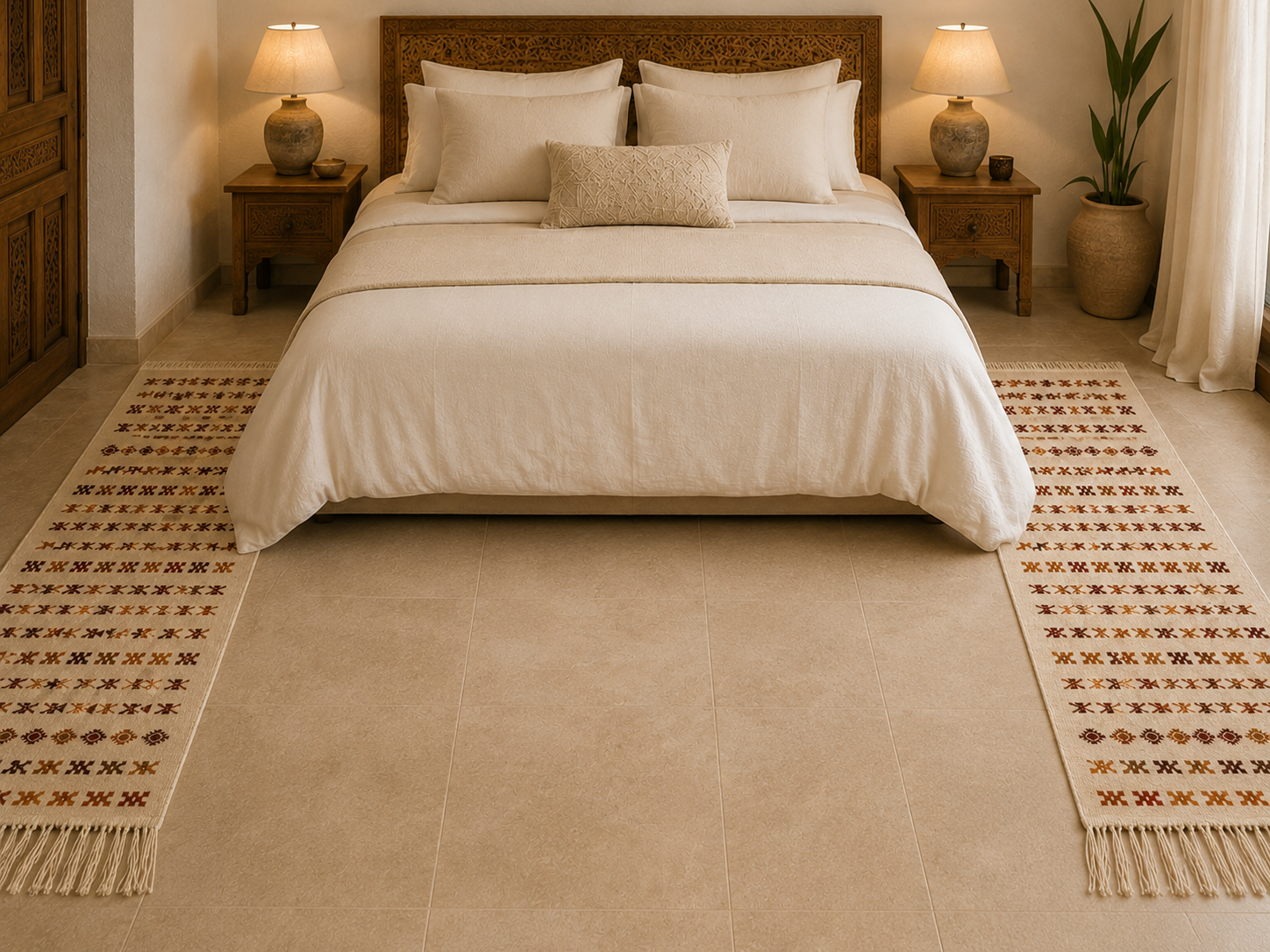
150 x 80 cm
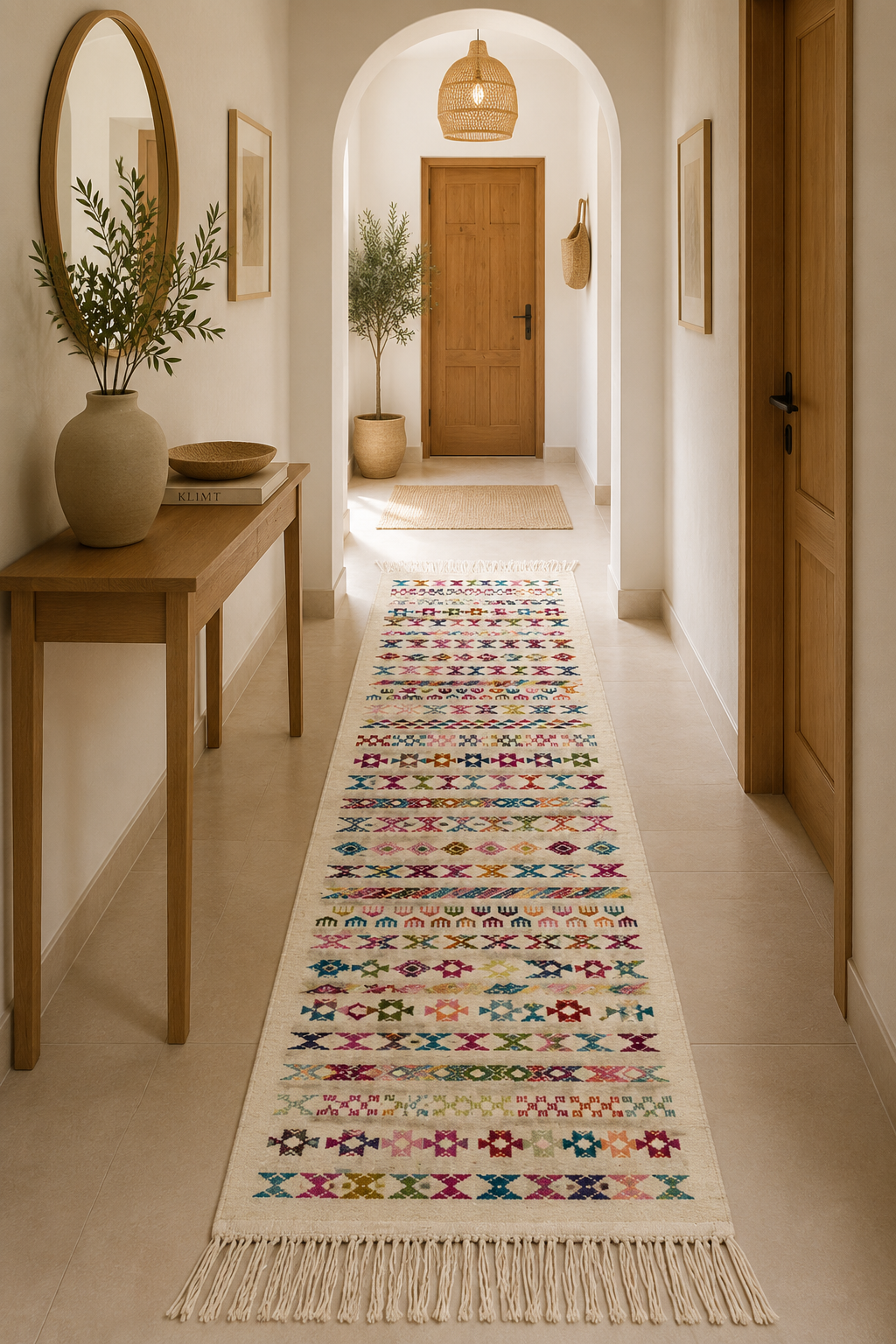
140 x 60 cm
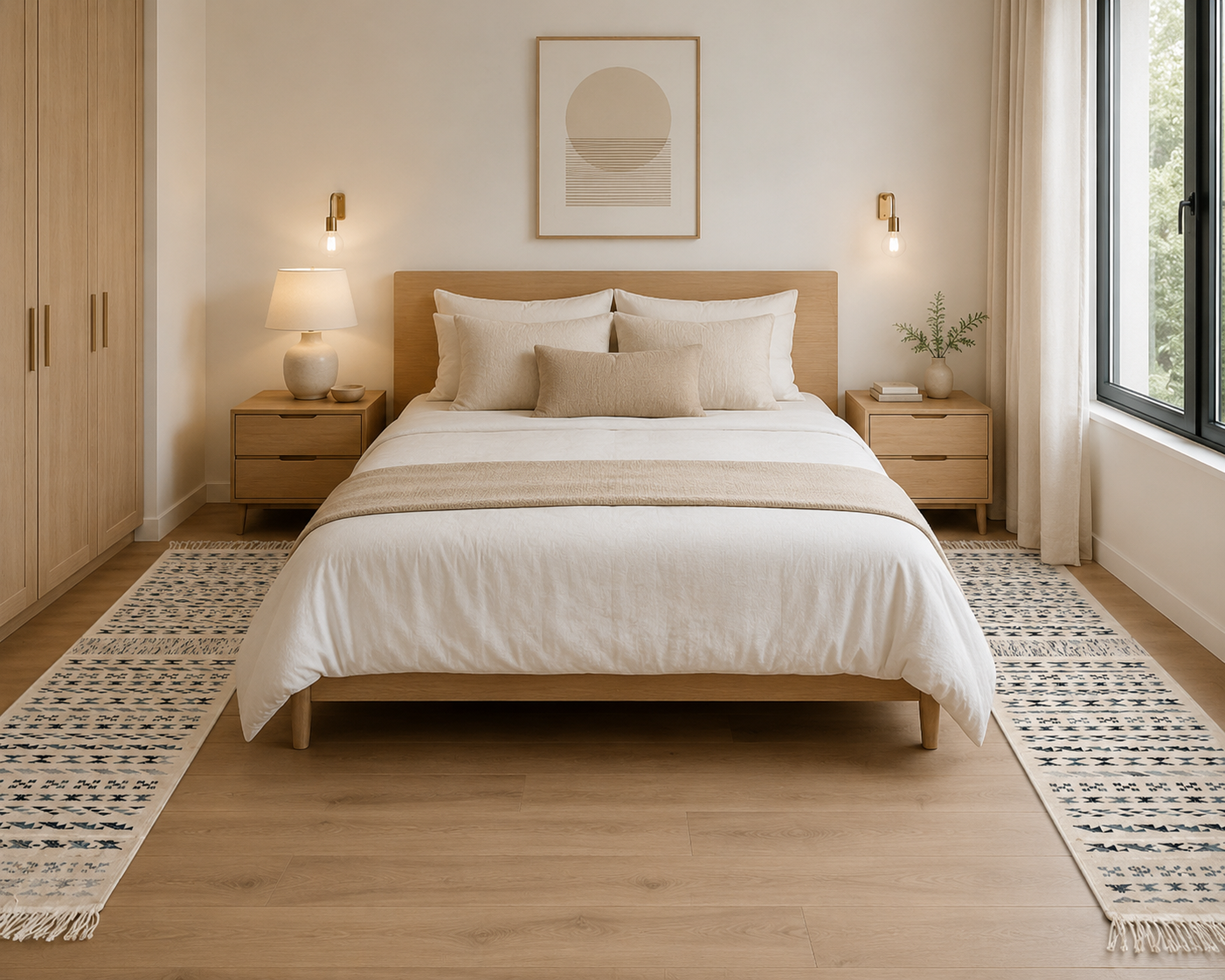
120 x 60 cm
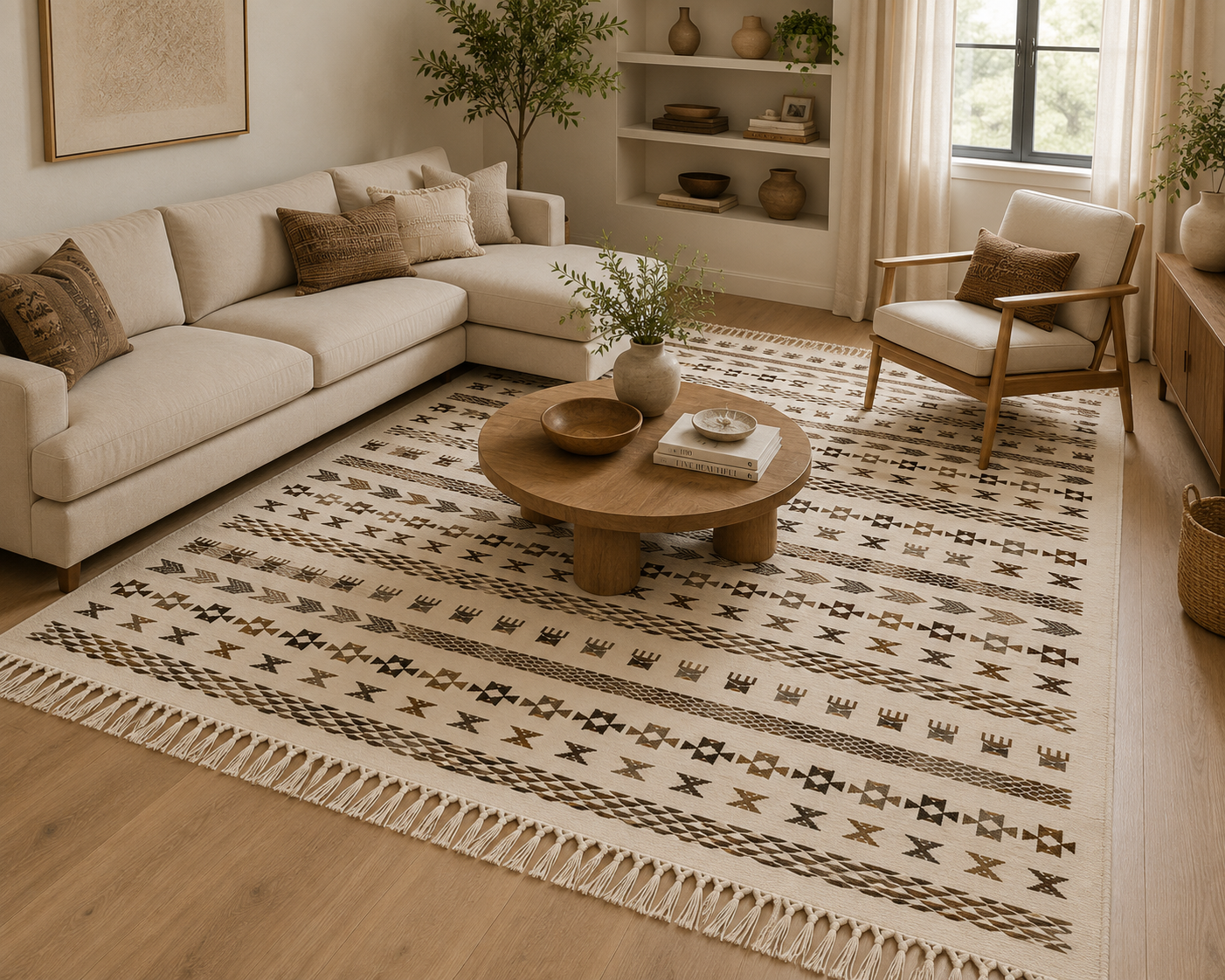
200 x 130 cm
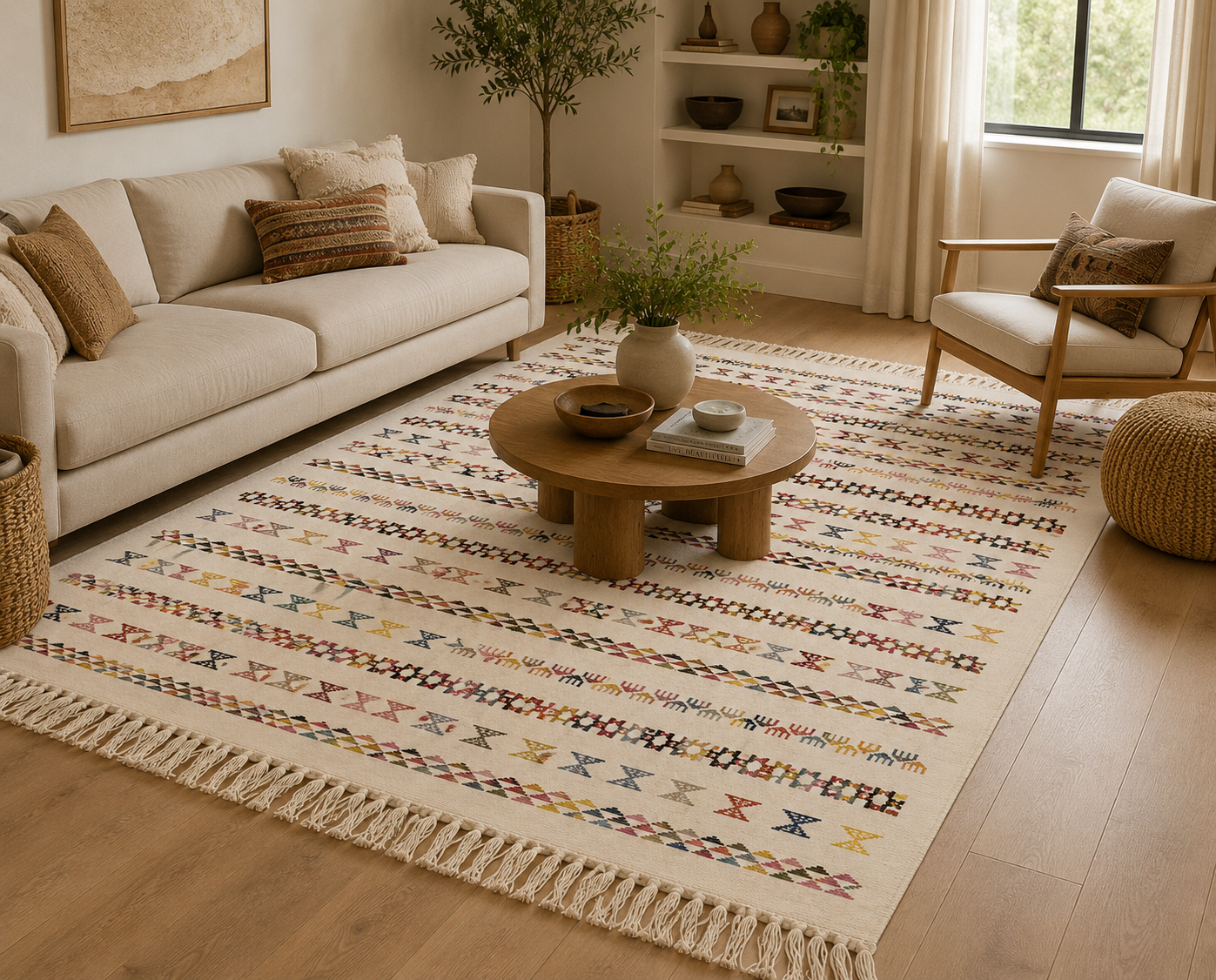
200 x 130 cm
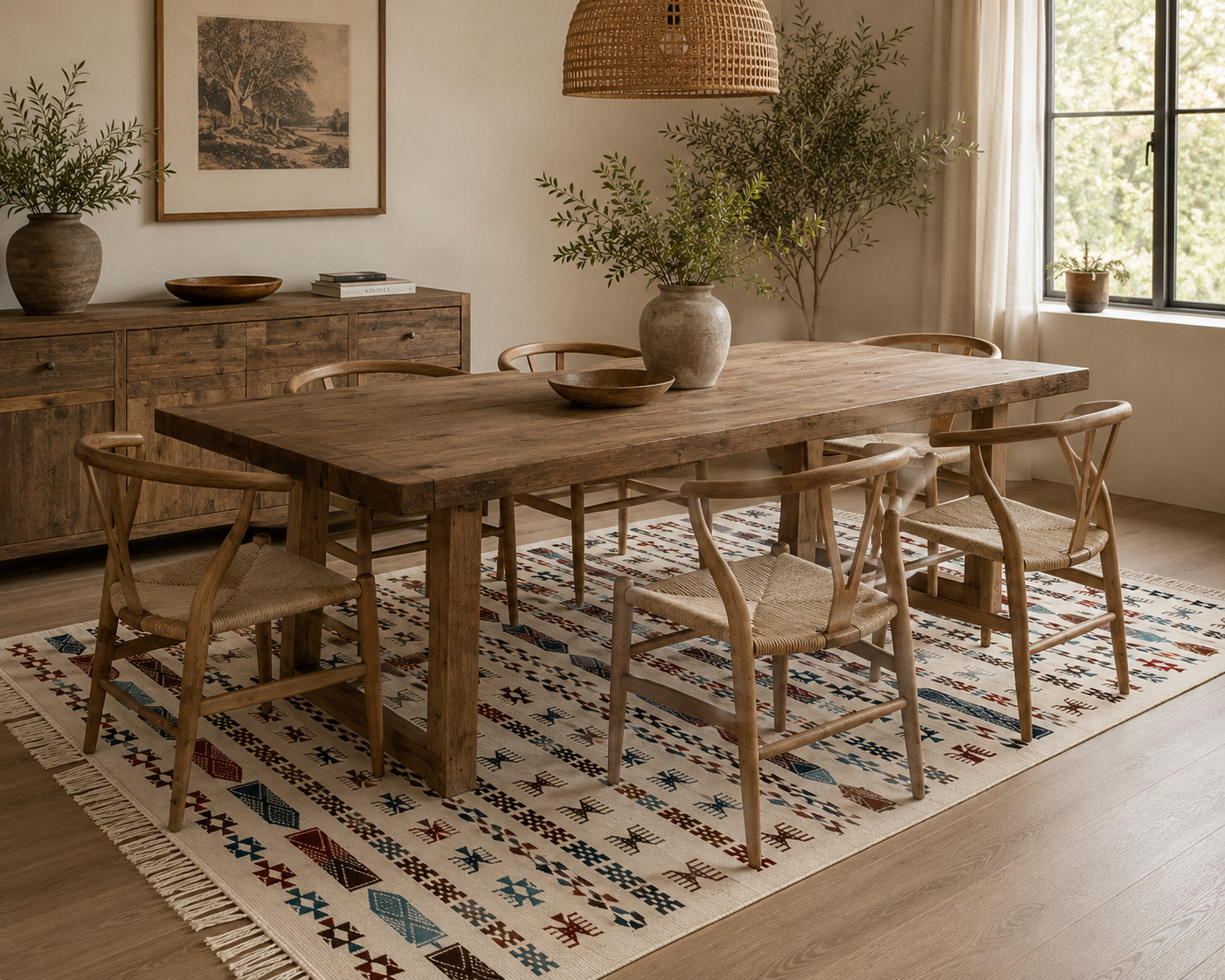
200 x 130 cm
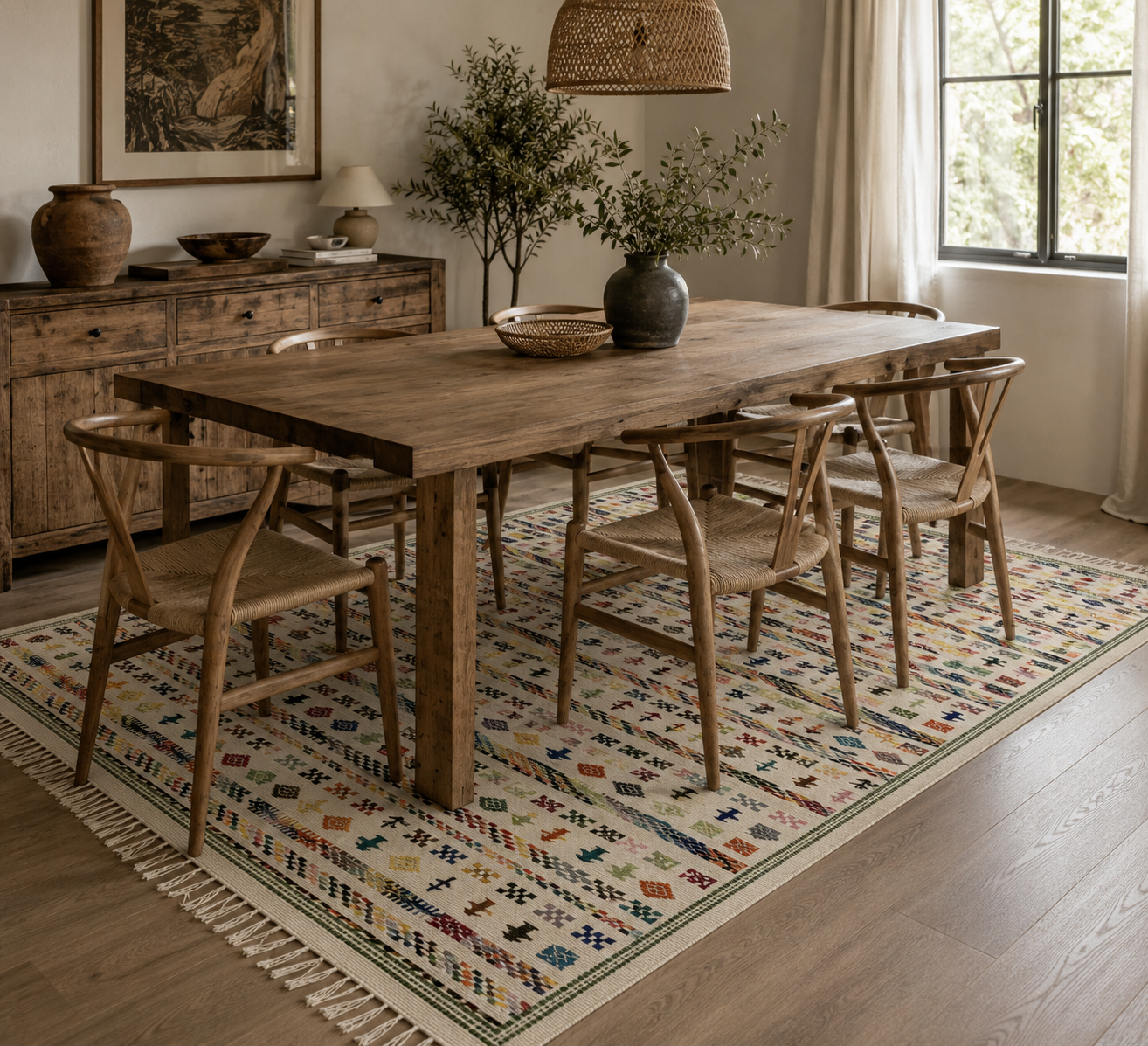
260 x 150 cm
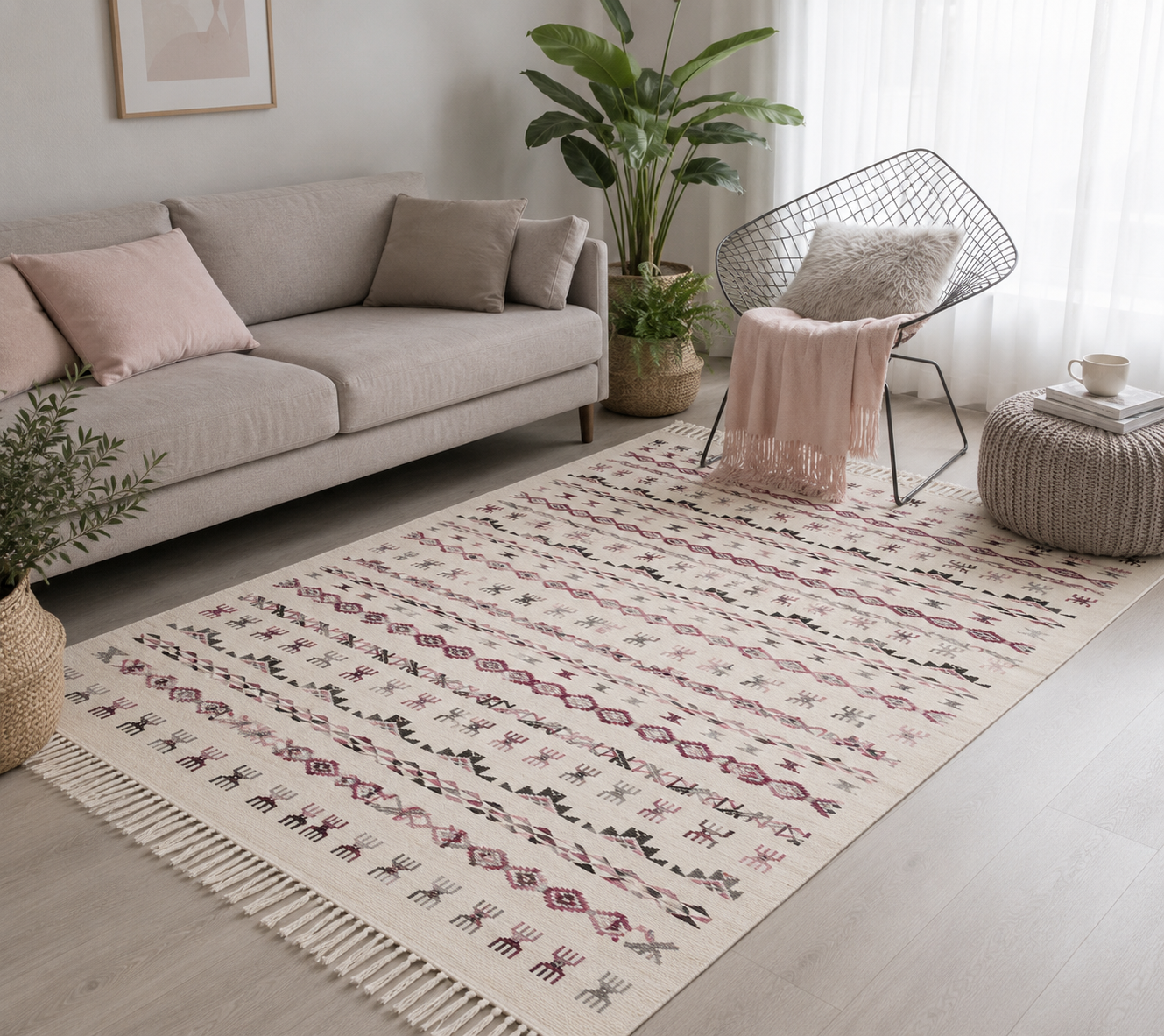
210 x 130 cm
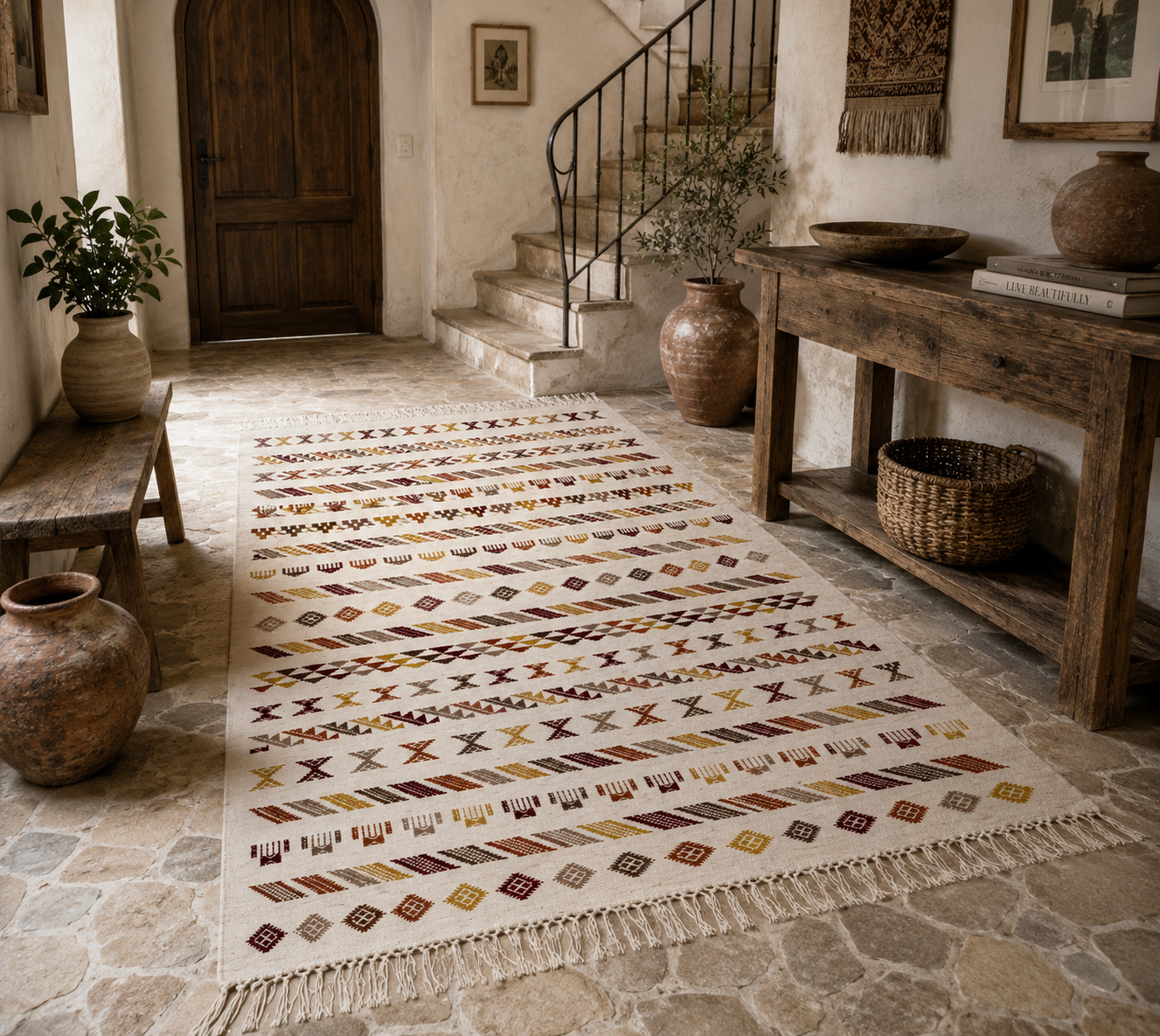
190 x 130 cm
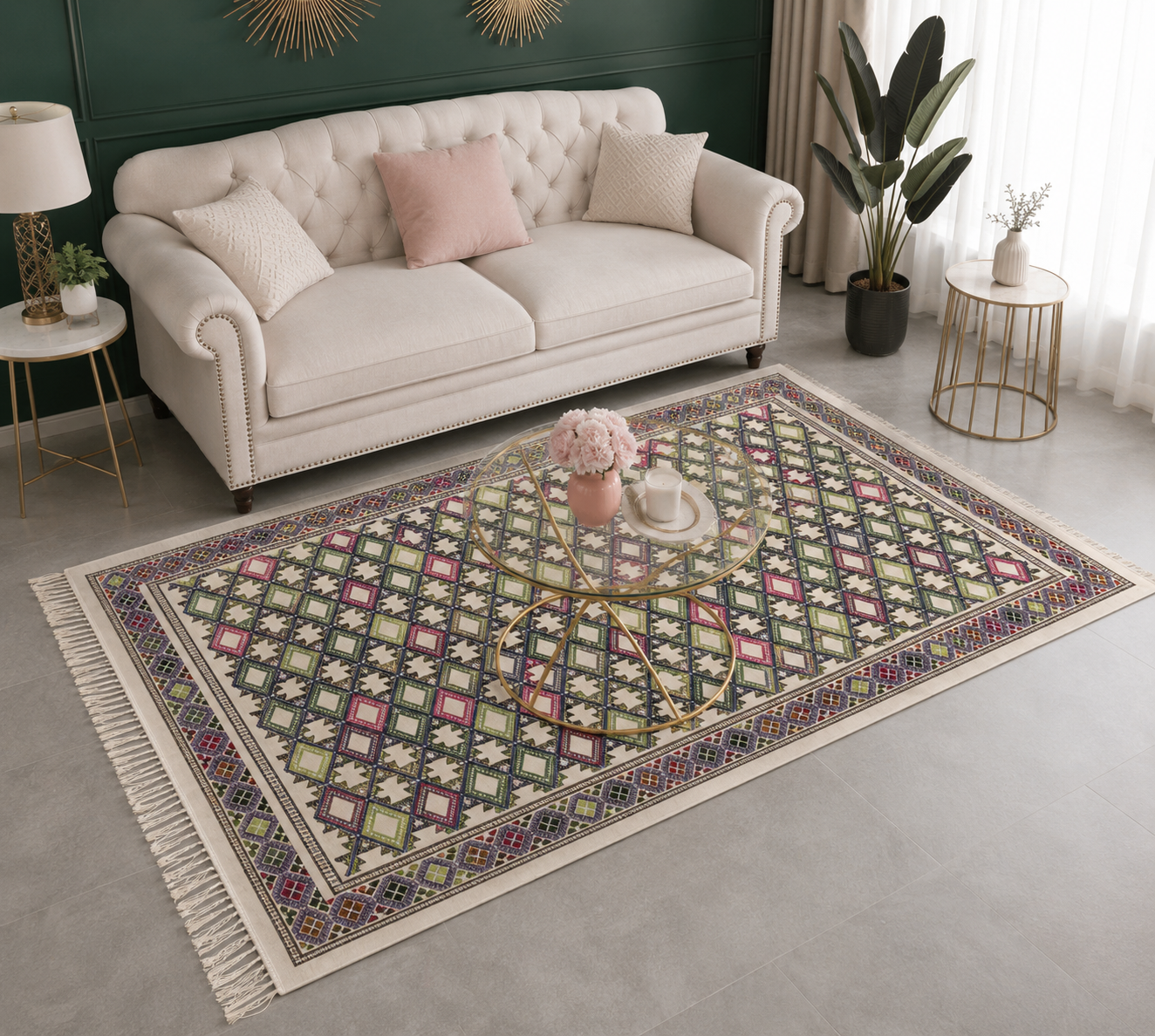
250 x 150 cm
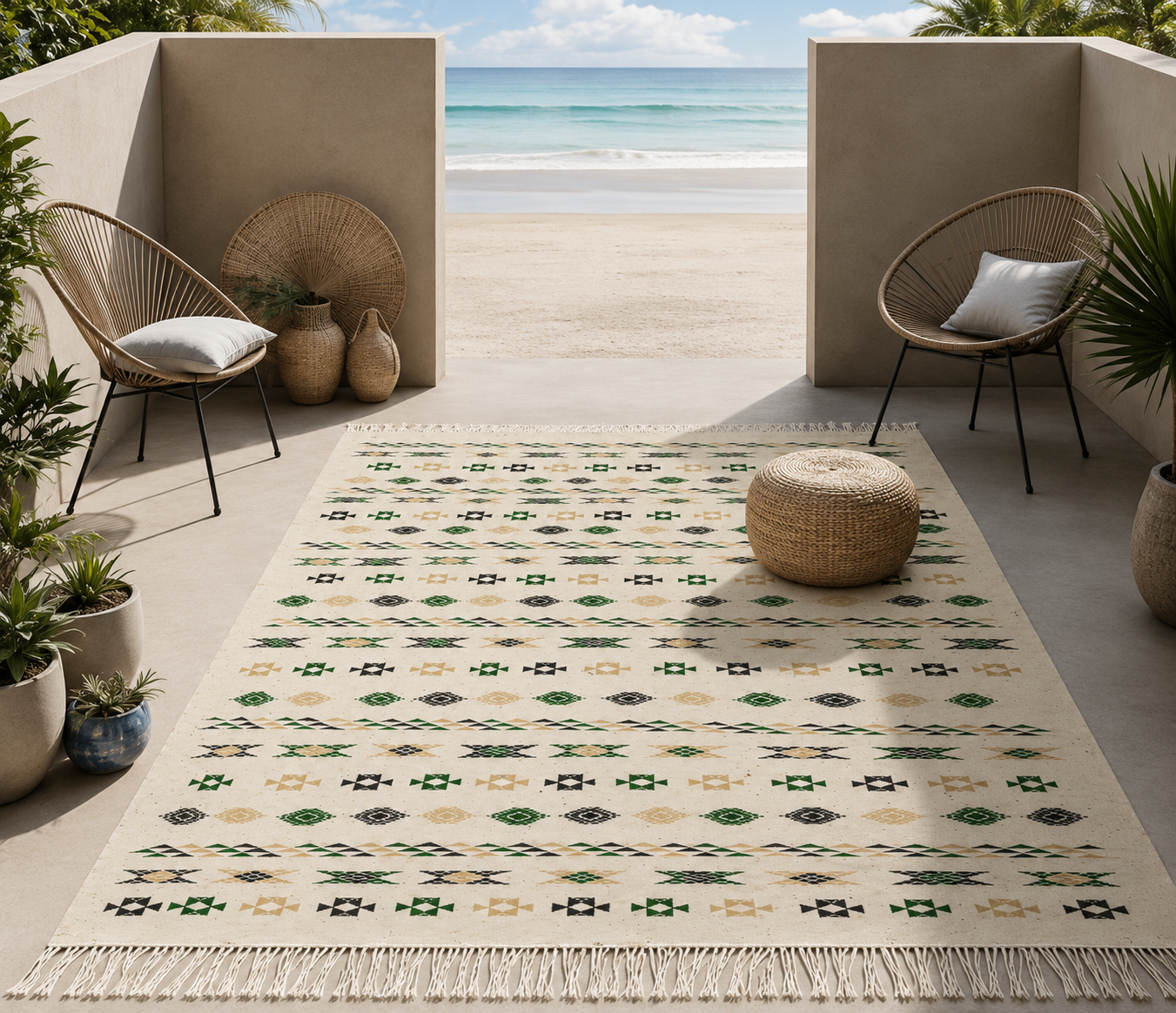
200 x 140 cm
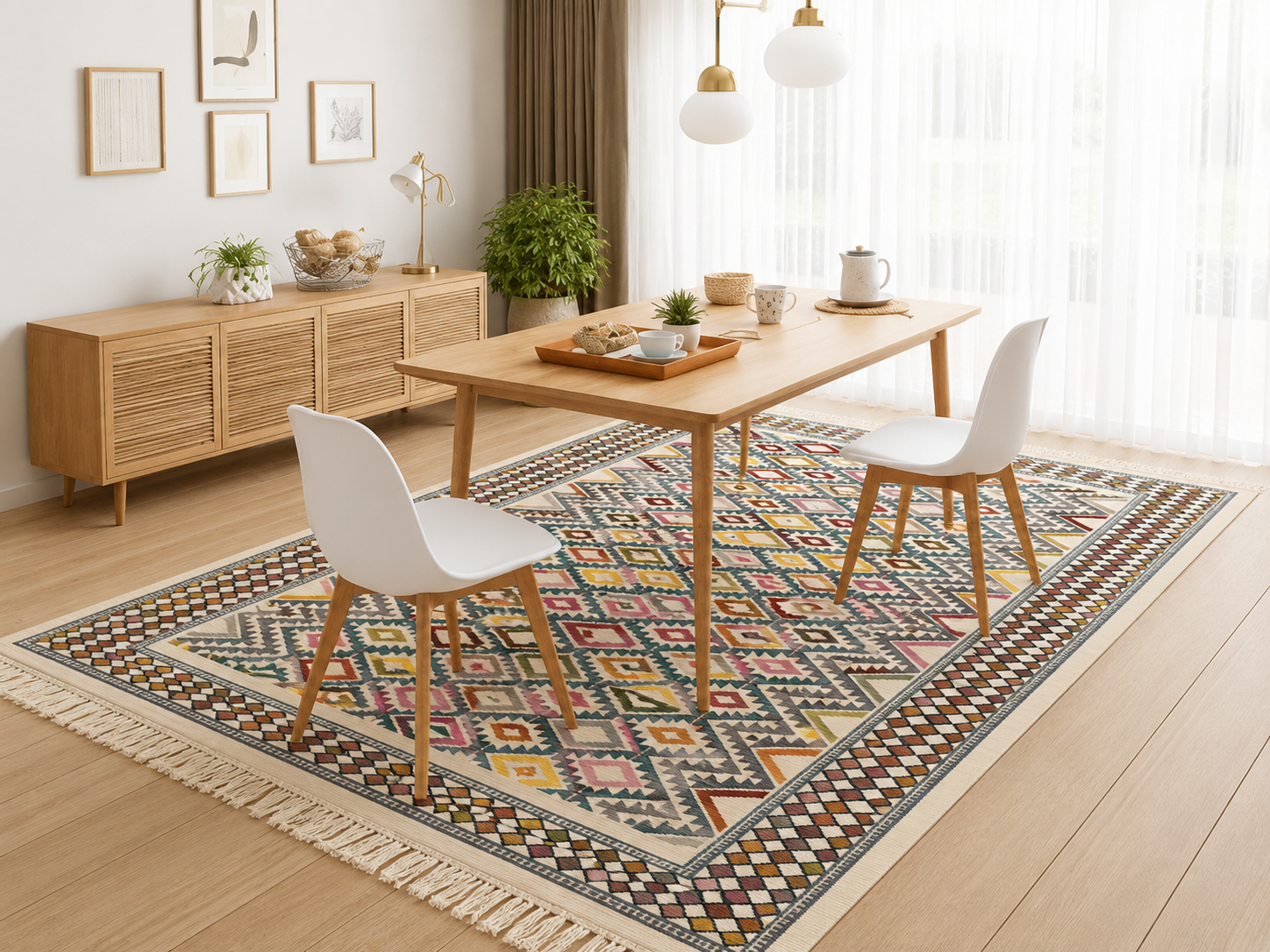
240 x 160 cm
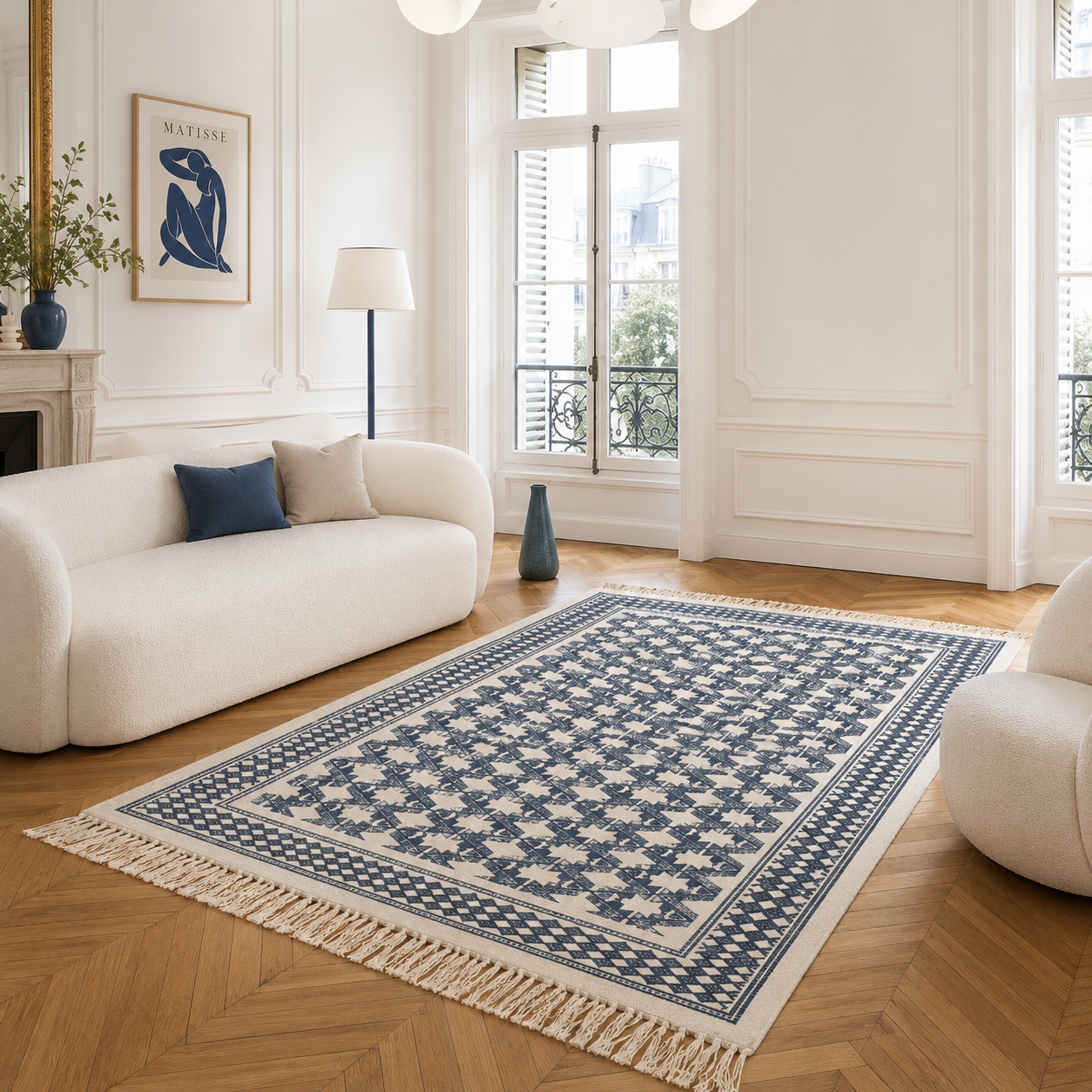
250 x 170 cm
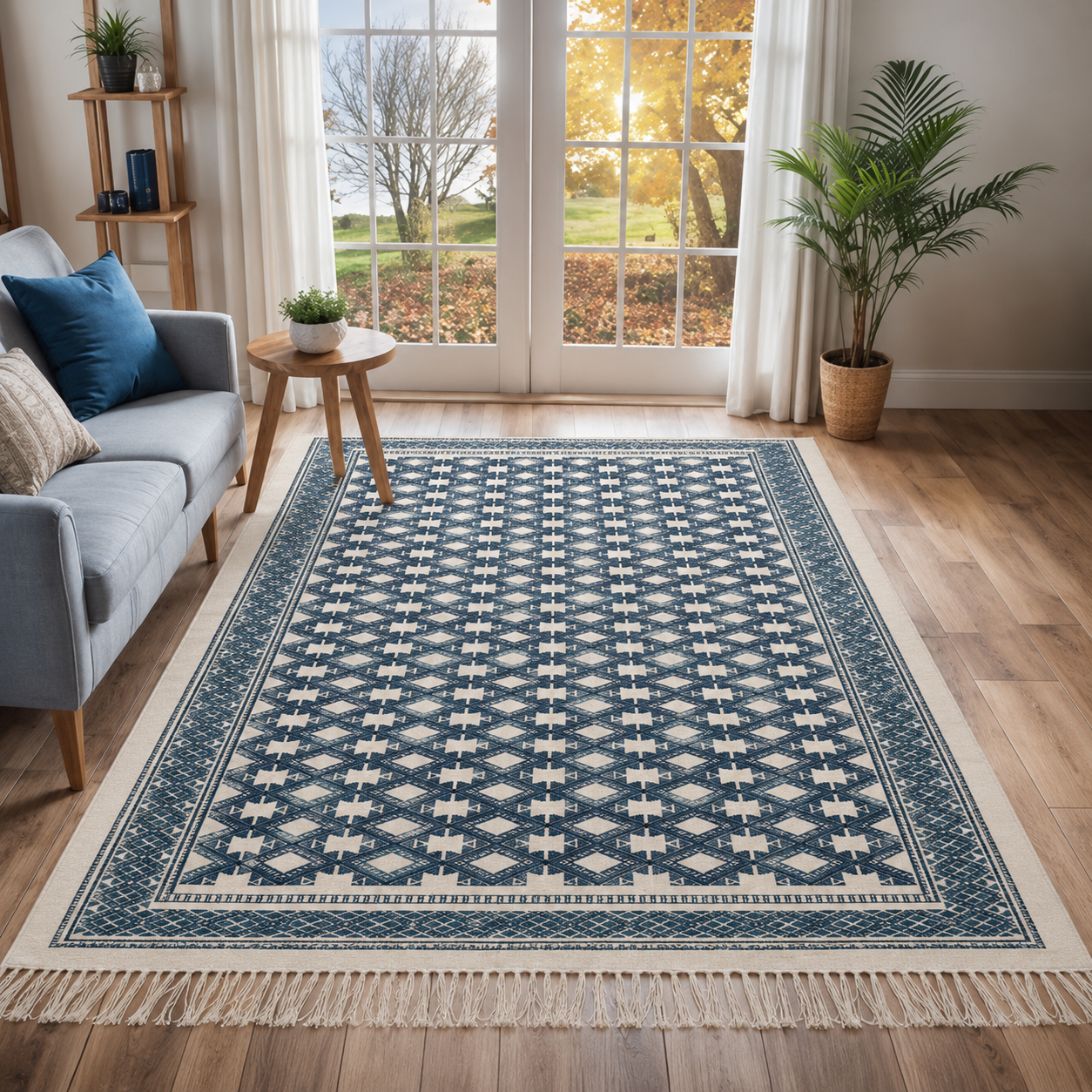
250 x 150 cm
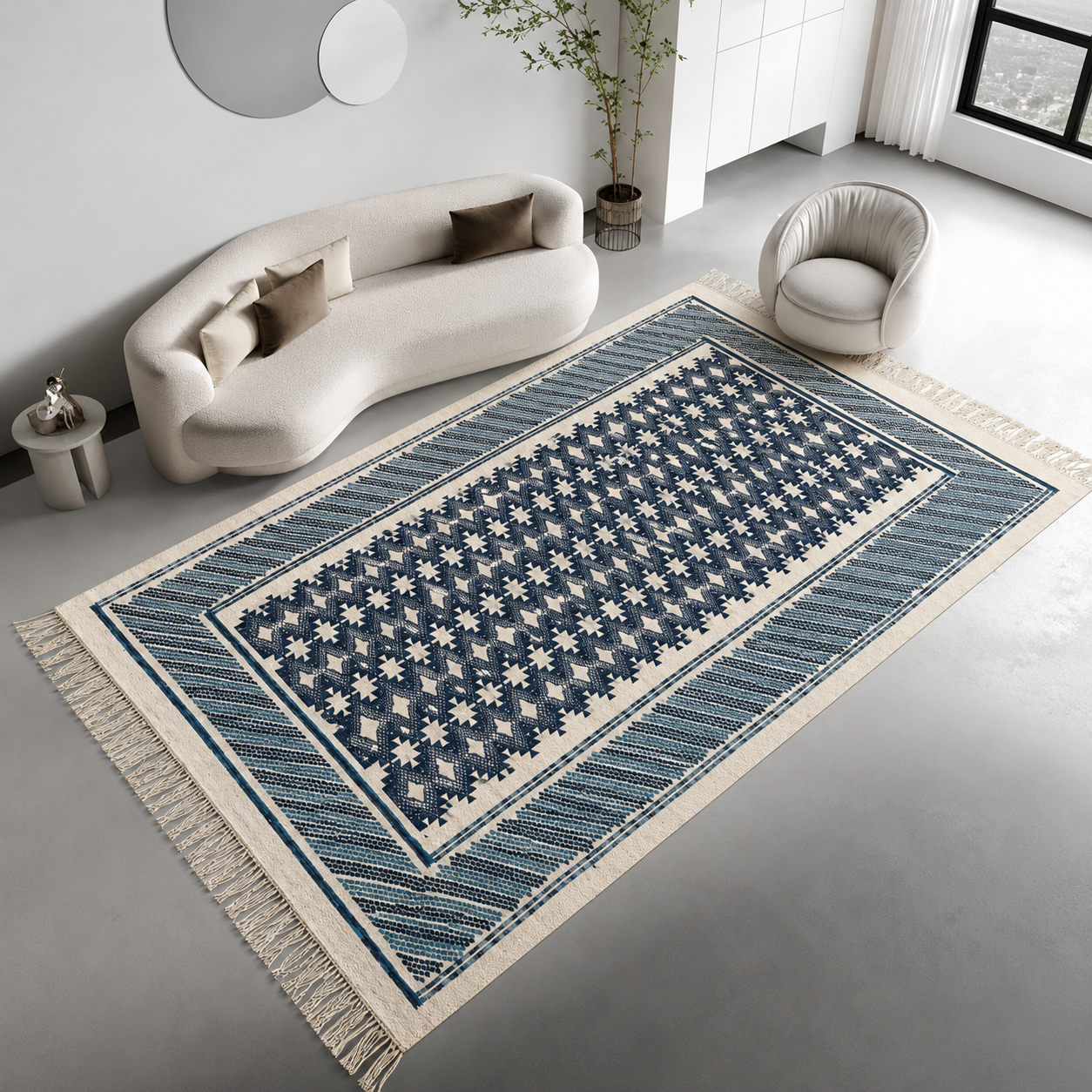
250 x 140 cm
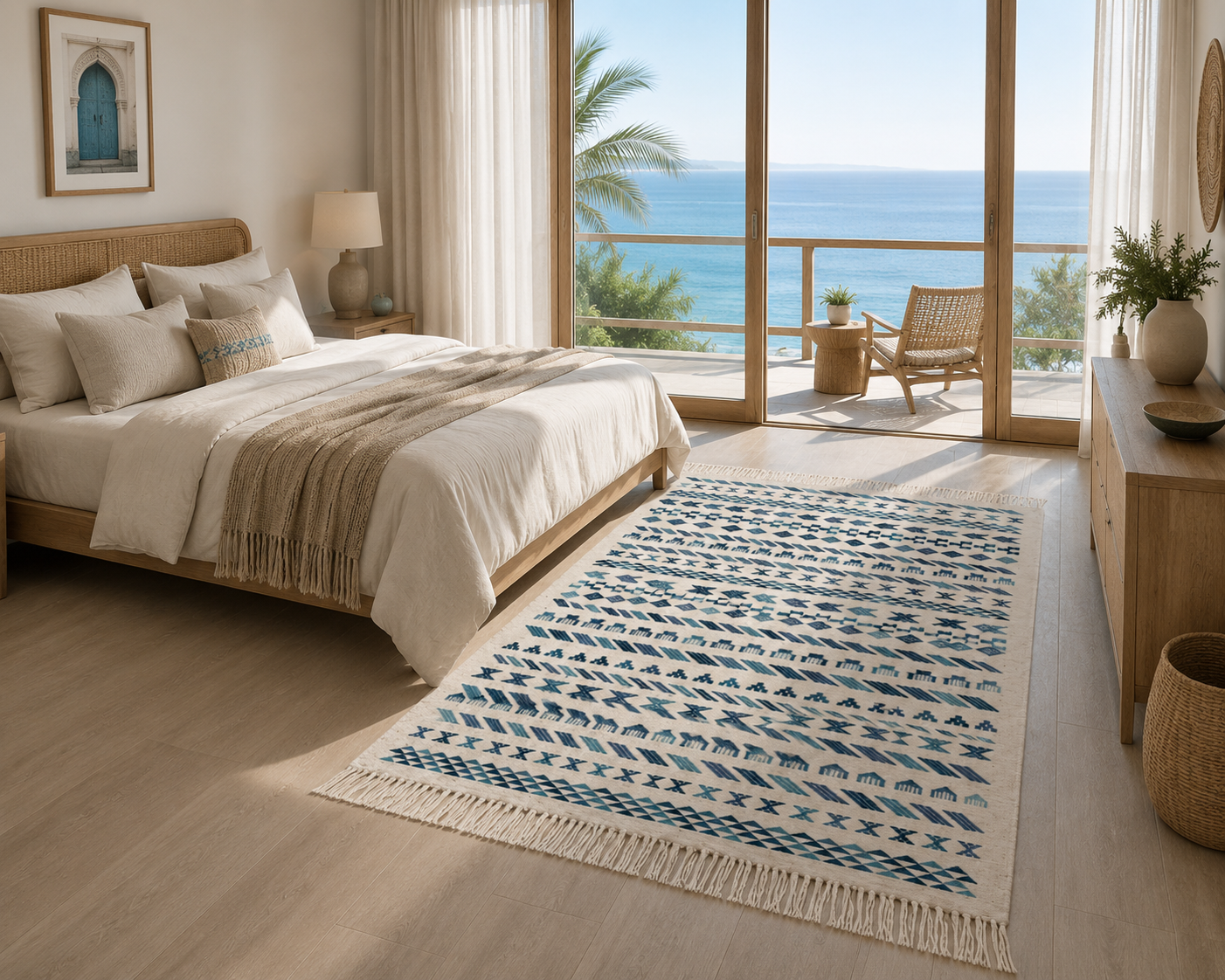
210 x 120 cm
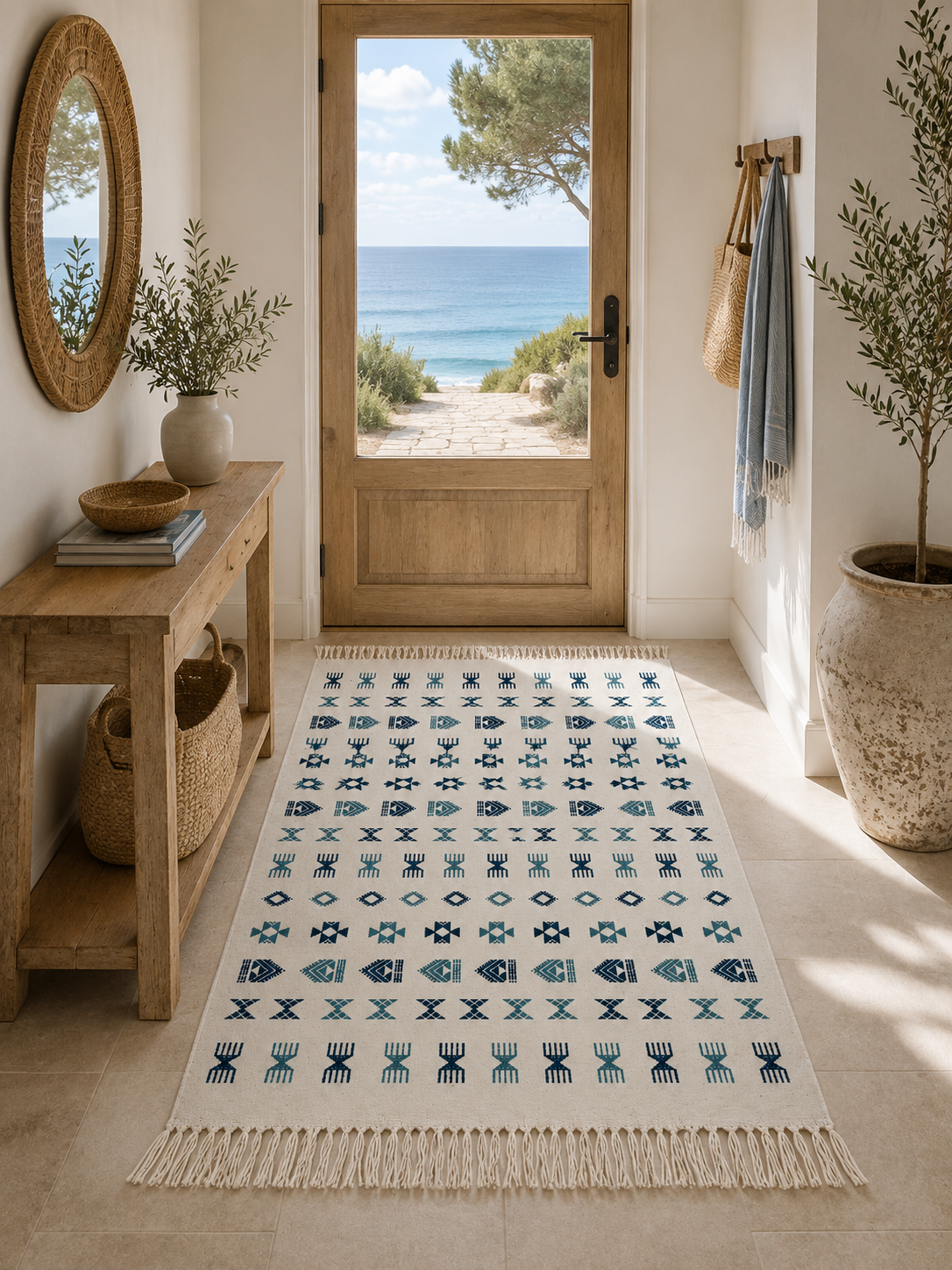
170 x 120 cm
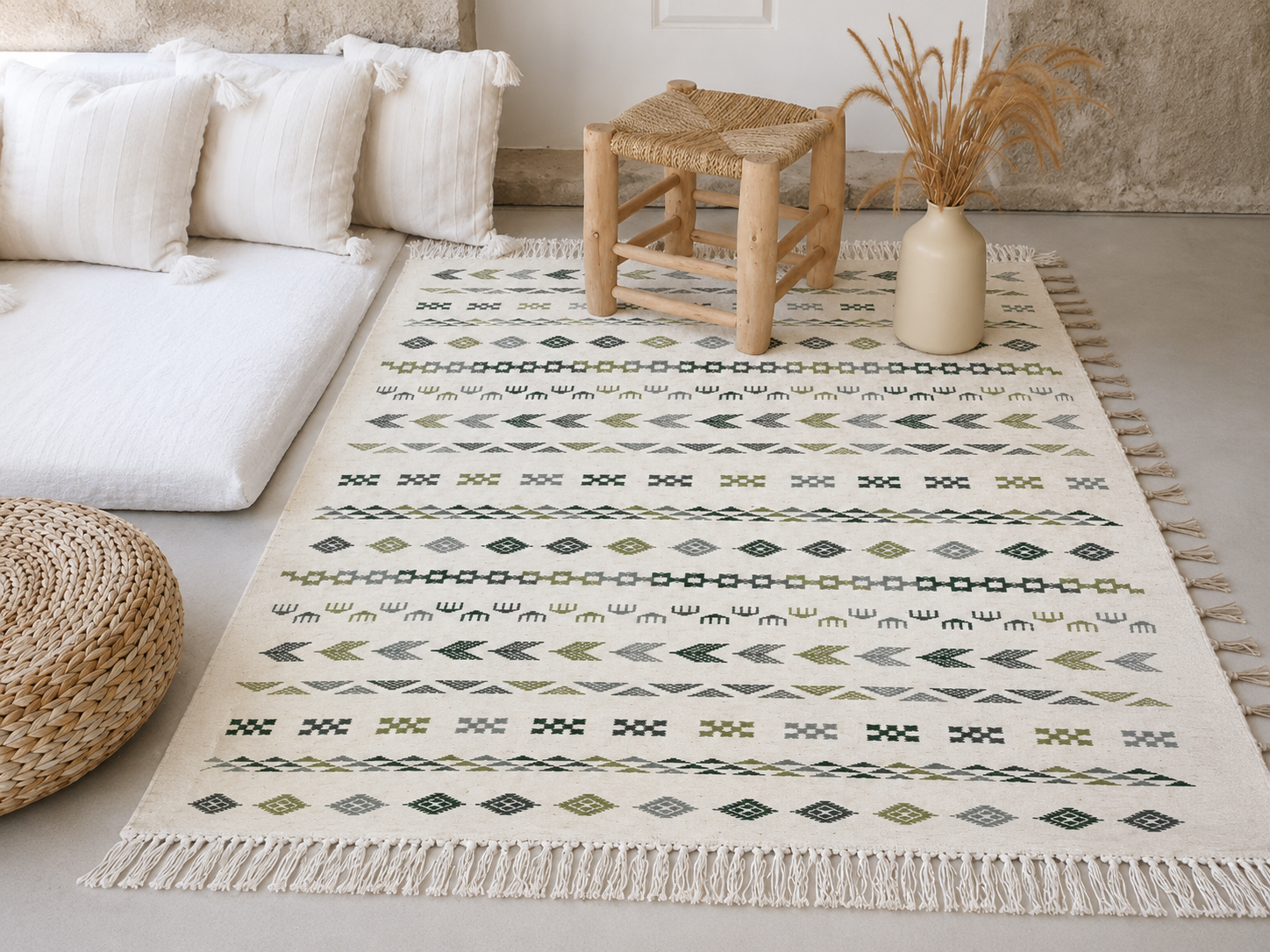
240 x 150 cm
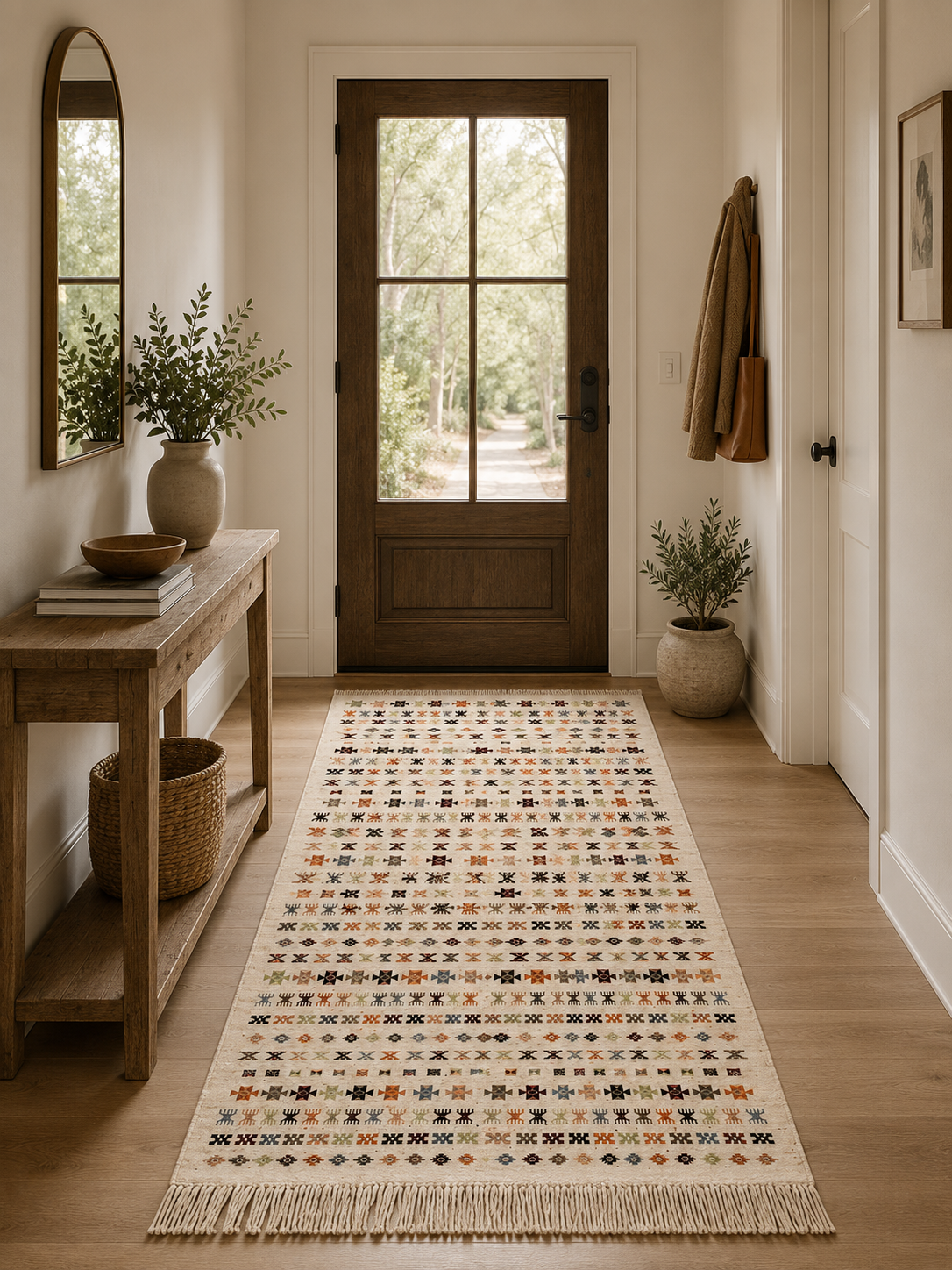
230 x 170 cm
210 x 150 cm